

As institutional capital piles into seniors living, a clutch of new projects is testing whether the sector’s traditional lowrise, single-care-model village is still fit for purpose.
For decades, the Australian retirement village has followed a fairly consistent template: single-storey or lowrise units, communal clubhouse, and residents who eventually moved out once their care needs became acute.
A handful of projects opening this year suggest that template is being pulled apart from several directions.
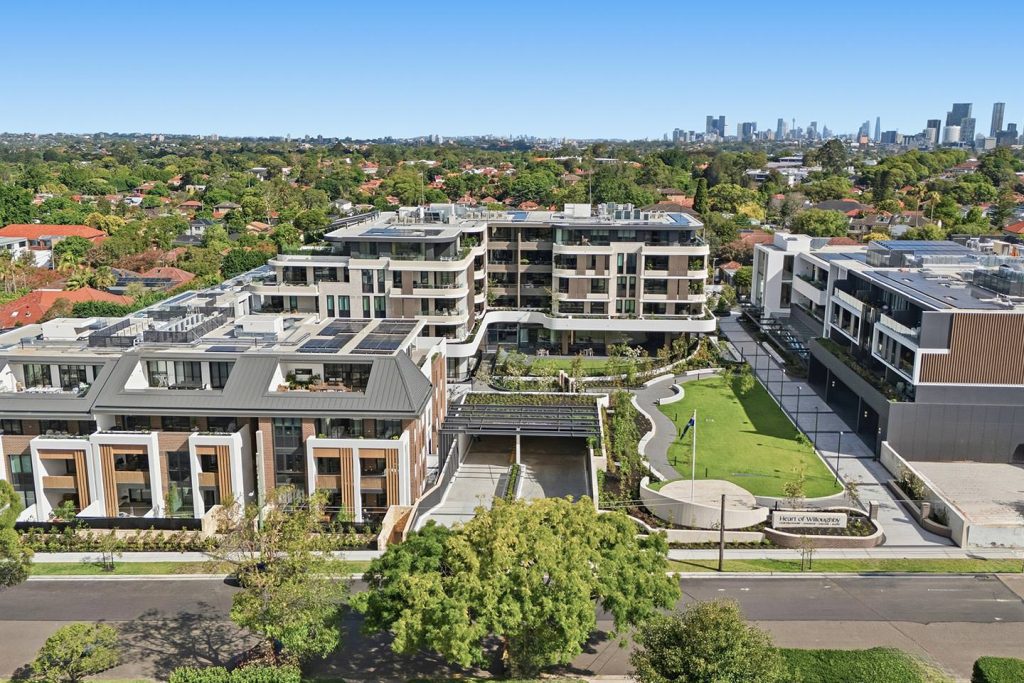
The clearest break from convention is at Sydney’s Lower North Shore, where Hyecorp has turned a former ex-services club site into what managing director Stephen Abolakian calls a vertical village.
The $400-million Heart of Willoughby precinct pairs 111 Hyegrove retirement apartments, sold from $1.17 million to $4.75 million, with 47 HyeCare high-care suites in the same building—alongside a rebuilt three-storey Club Willoughby, a retail and medical precinct and a 2000sq m memorial park.
The logic is continuity. Rather than a resident relocating off-site once they need full-time care, or a couple being separated as one partner’s needs diverge from the other’s, Heart of Willoughby is designed so residents can move from independent living into high, palliative or dementia care without leaving the precinct.
It’s a proposition aimed squarely at the top of the market, offering integrated care without an institutional look and feel.
Abolakian will unpack the project on stage at the Retirement and Aged Care Summit on September 3, alongside Aveo’s Geoff Robinson, who will discuss Bella Vista Haven.
Brisbane goes up, too
The vertical model isn’t confined to Sydney.
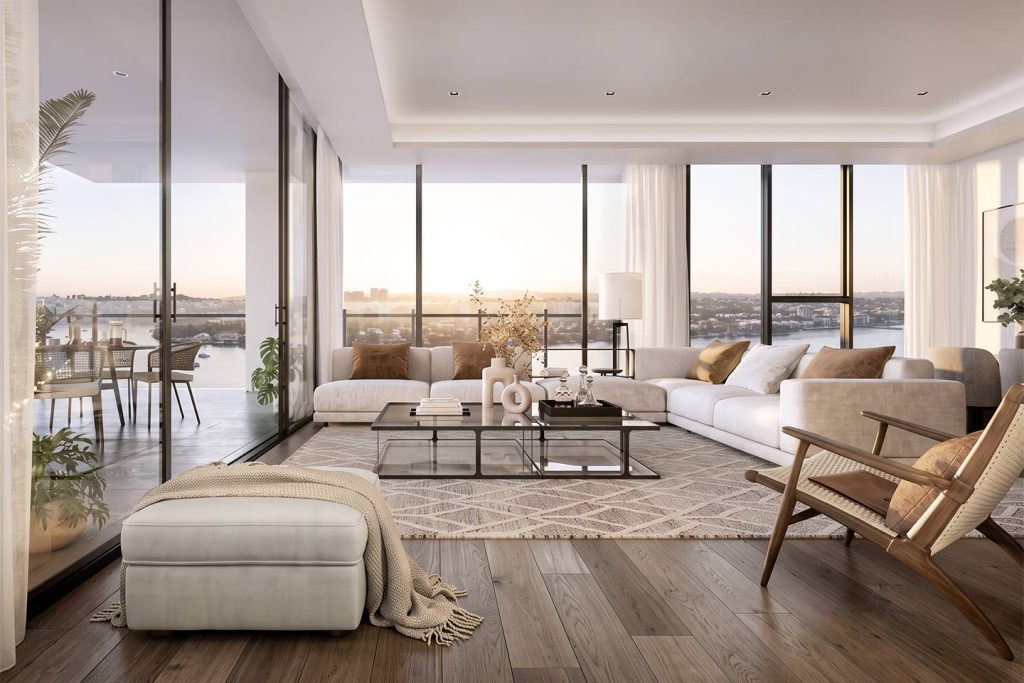
In Newstead, 3km from the Brisbane CBD, Architectus Conrad Gargett-designed Rendu Towers folds independent retirement living, residential aged care and dementia care into a single tower.
It marks a genuine departure from the suburban low-rise model that still dominates the Queensland market.
Wayfinding was a critical design detail in this project.
Learning by building
Not every project breaking the mould is chasing scale or a flagship launch.
Keyton has built a single independent living unit to passive-house standard—testing airtightness, thermal comfort and mechanical ventilation.
But it’s not a marketing exercise; it’s a genuine pilot.
The developer has framed it as a chance to understand what reduces dust, mould and running costs, and how it could realistically be rolled out cost-effectively across a full village.
It’s a counterpoint to the flagship openings elsewhere in the sector.
Keyton has also broken ground on a 218-home retirement living community at Vermont South (pictured at top), which interim chief executive Paul Martin said would “deliver much-needed housing choice for older Australians, while supporting housing mobility across the broader community”.
CBRE’s Lender Sentiment Survey identified feasibility as 2026’s single biggest challenge for lenders, with construction costs running well ahead of acquisition pricing.
Keyton’s pilot has promoted building performance as a cost lever rather than a sustainability credential, which could be a lynchpin in the feasibility of developments going forward.
The adaptive reuse pattern
Adaptive reuse has also become a recurring theme across several of this year’s projects, addressing what happens to community land that’s outlived its original use.
Heart of Willoughby is one example—a legacy club site turned into aged and retirement housing without the club losing its footprint.
RetireAustralia’s The Green, in Brisbane’s Tarragindi, is another: a 92-apartment community built in partnership with the Yeronga Services and Community Club around a still-operating championship bowling green and clubhouse, rather than displacing it.
The award-winning project alongside the Heart of Willoughby in NSW, points to adaptive reuse of ageing club and community land as an emerging development pathway in its own right.
It solves a site-access problem for developers while giving cash-strapped clubs a way to monetise underused land without selling it off entirely.
While tailwinds from a growing and ageing population continue to drive demand, the feasibility fundamentals are less straightforward.
Australia will require about 5280 new independent living units each year through to 2061 to maintain the current penetration rate of 4.5 per cent, according to Cushman & Wakefield research.
The research indicated that development feasibility challenges were the key reason underlying demand was not being met.
Retirement developers are testing new development models to unlock opportunity in the sector that needs a significant boost to its supply pipeline.